Juma: Where Marketing Strategy Becomes Shippable Work
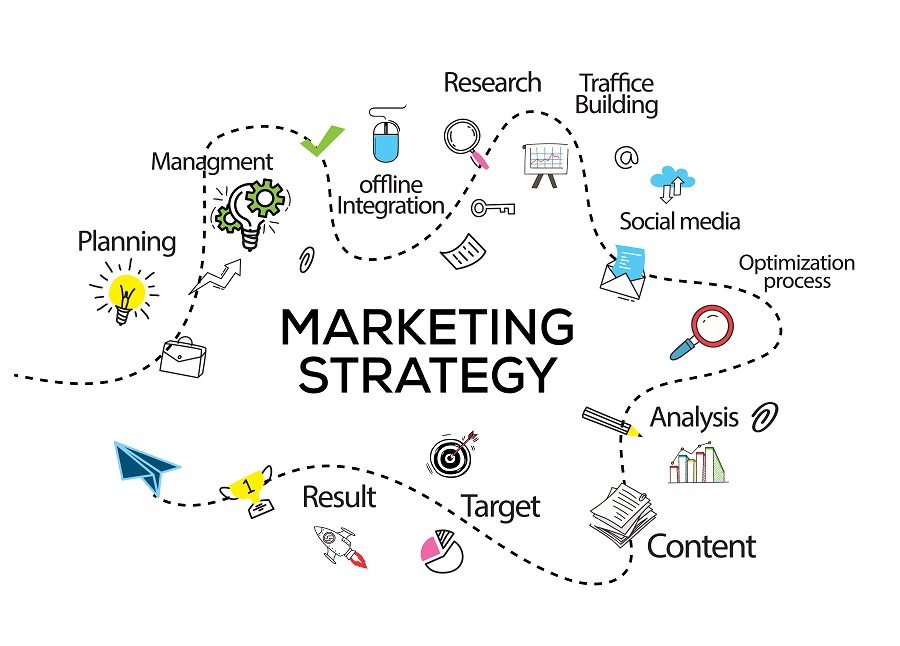
Juma is quietly redefining how modern marketing teams move from strategy to execution. Instead of scattering briefs, documents, and ideas across tools, Juma pulls everything into a single AI workspace where teams can think, plan, create, and ship together. The result feels less like using a tool and more like working inside a living marketing brain that understands context and momentum.
At its heart, Juma is the AI workspace for marketing teams. It unites people and workflows so that research, strategy, content creation, and analysis all live in one coordinated environment. You are not just prompting an assistant; you are collaborating with a system that understands your campaigns, your assets, and your goals.
That focus on teams is what gives Juma an unusually human feel. It is built around the reality of how marketers actually work: messy inputs, evolving ideas, and high expectations for polish and performance. Juma absorbs that reality and turns it into something structured, repeatable, and surprisingly elegant.
The end result is simple: marketing strategy finally becomes shippable work. Instead of documents that die in shared drives, Juma helps teams turn thinking into ready-to-use assets that can be launched, tested, and refined.
An AI Workspace Built For the Way Marketers Actually Work
Most AI tools orbit around single tasks. Juma orbits around the entire marketing workflow. It is not just a writing assistant or an analytics helper; it is the place where campaigns are born, refined, and prepared for launch. Everything starts from the idea that teams need one environment to think and ship.
Within Juma, research is not an isolated step. It flows directly into strategic narratives, messaging frameworks, and content calendars. That same context then flows into content creation, so every brief, asset, and iteration is grounded in the original intent. Nothing gets lost in translation between strategy decks and production queues.
By uniting research, strategy, content creation, and analysis, Juma removes the friction that usually slows teams down. The insights that shape your positioning are the same ones informing your landing pages, lifecycle emails, and paid campaigns. You get coherence by default, not as something you have to fight for.
This is what it means for Juma to be the AI workspace for marketing teams. It does not replace people or processes; it gives them a stable, intelligent backbone. Teams get a shared space where information compounds over time and every project adds to a richer base of knowledge.
- • End-to-end environment for the full marketing workflow
- • Research, strategy, and content all live in one shared context
- • Reduces friction and handoff loss between teams and stages
- • Creates a compounding base of knowledge for future campaigns
Juma as a Superagent: From Chat to Real Work
Where Juma truly steps beyond traditional AI assistants is in how it executes. Juma is a superagent built for modern marketing teams, designed to move from request to result without constant hand-holding. Instead of asking you for the next prompt, it moves through an entire workflow and hands you a complete, ready-to-use asset.
Unlike traditional AI assistants that only respond to questions, Juma executes complete workflows autonomously. It can analyze data, synthesize insights, generate content across multiple formats, and bring it all together in a way that matches your brand and objectives. You do not get a half-finished draft; you get something that feels close to production-ready.
This shift matters because it changes how teams think about capacity. Juma is not a novelty that sits on the side; it is an active participant in the work. It helps you launch more experiments, support more channels, and move faster on ideas that would otherwise sit in the backlog. The tool becomes part of the team.
In that sense, Juma is AI that does not just chat, it does the work. It runs through the steps that used to require late nights, long email threads, and multiple revisions. You keep control of direction and final edits, while Juma carries the heavy operational load.
- • Superagent built specifically for modern marketing needs
- • Executes full workflows instead of isolated responses
- • Analyzes data, generates content, and delivers finished assets
- • Frees teams to focus on direction, creativity, and judgment
From Team-GPT to Juma: An Evolution in What AI Can Do for Teams
Before it became Juma, the product was known as Team-GPT, a name that highlighted its collaborative roots. The original focus was on bringing AI into shared team workflows instead of keeping it as a solo tool. That foundation of collaboration is still visible today in how Juma supports groups, not just individuals.
The transition from Team-GPT to Juma is more than a rebrand. It signals a move from generic AI assistance toward a deeply specialized workspace for marketing. The name Juma reflects a more defined identity: not just a model behind the scenes, but a trusted environment where critical marketing work happens.
That evolution shows up in the product itself. Where Team-GPT emphasized access to AI, Juma emphasizes outcomes for marketing teams. It fuels specific workflows, aligns with concrete deliverables, and cares about what gets shipped and measured. The product has grown from a flexible tool into a focused partner.
For teams that started with Team-GPT, Juma feels like a natural next chapter. The familiar strengths remain, but the experience has been sharpened around the realities of modern marketing: more channels, tighter timelines, and higher expectations for consistency and impact.
How Juma Changes the Day-to-Day Life of a Marketing Team
To understand Juma, you have to picture a normal week inside a marketing team. There are campaigns to launch, reports to pull, ideas to refine, and a content backlog that never quite ends. Juma steps into that picture not as a gadget, but as a working companion that handles what used to drain time and focus.
Briefs get sharper because Juma can help structure them from scattered input. Messaging becomes more consistent because the same AI workspace is used across channels, regions, and stakeholders. Even revisions feel lighter, since you are starting from well-informed drafts rather than blank pages.
On the analytics side, Juma does more than surface numbers. It helps connect performance data back to strategy and creative choices. That loop from insight to action becomes shorter and more natural because the same system that reads the data can also propose and generate new iterations of campaigns.
The net effect is that teams can do more of the work they enjoy, with less of the overhead that usually surrounds it. Juma reduces the gap between ambition and execution, turning ambitious campaign ideas into a steady stream of shippable work.
- • Enhances briefs, messaging, and creative consistency
- • Integrates analytics with creative and strategic decisions
- • Reduces time spent on setup, formatting, and manual busywork
- • Expands a team’s effective capacity without expanding headcount
A New Standard for Marketing-Centric AI
Plenty of tools claim to be “for marketers,” but Juma wears that promise differently. Its design choices, workflow structure, and language all point back to an understanding of how marketing actually operates as a function. It does not treat campaigns as isolated tasks; it treats them as living systems that need constant iteration.
By placing marketing teams at the center, Juma sets a higher bar for what AI in this space should do. It shows that an AI workspace can respect brand nuance, strategic context, and operational complexity while still moving quickly. Speed does not come at the expense of quality or coherence.
This creates a subtle but important shift in how teams see AI. Juma stops feeling like a speculative experiment and starts feeling like infrastructure. It becomes something you rely on week after week, not just something you test in a spare hour. That reliability is what lets teams weave it into their core processes.
In that sense, Juma is less a tool and more a quiet standard setter. It points toward a future where marketing teams expect their AI environments to handle full workflows, support true collaboration, and deliver assets that are ready to launch.
Where Strategy Meets Shipping: The Juma Effect
Juma stands out not because it does one thing brilliantly, but because it weaves everything together. Research, strategy, execution, and analysis live inside a single AI workspace for marketing teams. That unity means every campaign benefits from the full story, not just a fragment of it.
As a superagent built for modern marketing teams, Juma moves confidently from input to outcome. It analyzes, generates, and assembles, turning loose ideas into polished assets that are ready to use. It is AI that does the work, so marketers can focus on the judgment calls that only humans can make.
The journey from Team-GPT to Juma captures a broader shift in the industry: away from generic assistants and toward specialized, outcome-focused AI workspaces. Juma represents that new category with clarity, proving that AI can be both powerful and grounded in real team needs.
In the end, Juma is where marketing strategy becomes shippable work, not as a slogan, but as a daily reality. It closes the distance between planning and publishing, giving teams a place where their best ideas can be quickly, consistently, and beautifully brought to life.